
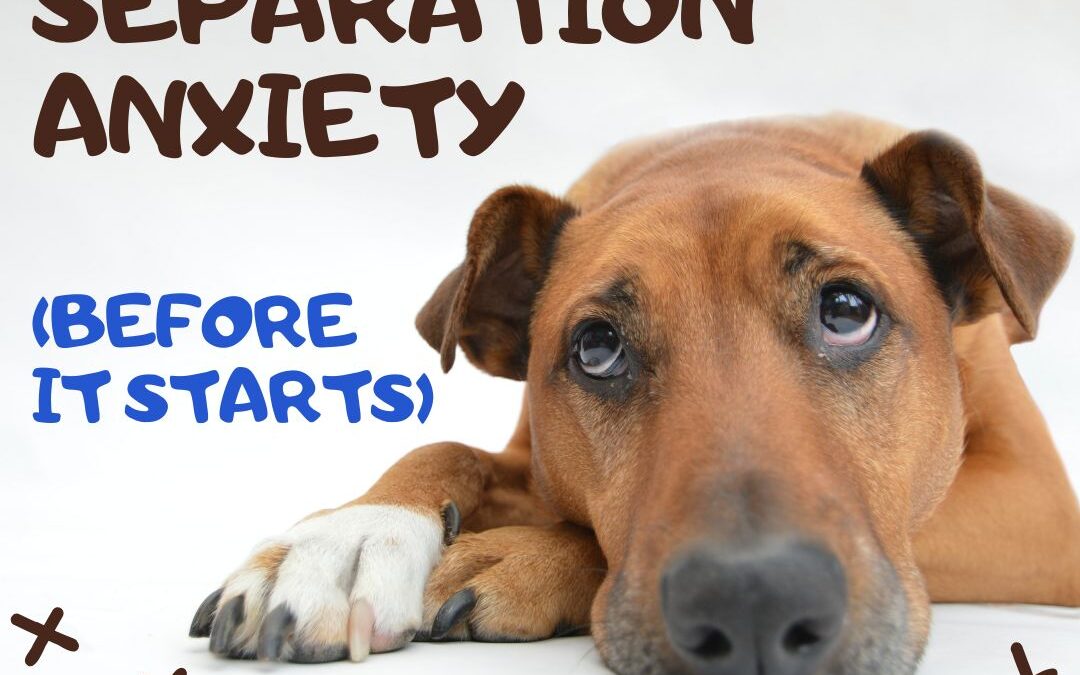
Separation anxiety is one of the most common behavioral challenges pet owners face, and it often develops quietly. It does not usually begin with dramatic signs. It starts in small ways that are easy to overlook. A puppy that follows you from room to room. A dog that becomes restless when you pick up your keys. A pet that struggles to settle when left alone for even a short period of time. These moments can seem harmless at first, but over time they can grow into something much more difficult for both you and your pet.
The good news is that separation anxiety is often preventable. With the right approach early on, you can help your pet build confidence, independence, and a sense of security that stays with them throughout their life. Prevention is not about creating distance or withholding affection. It is about teaching your pet that being alone is safe, predictable, and temporary.
As a pet photographer, I often see the difference between pets who feel secure and those who struggle with separation. Confidence shows up in their posture, their expressions, and their ability to relax in new environments. When a pet feels safe being away from their owner, it creates space for genuine moments to unfold naturally. That sense of ease is something that can be nurtured long before anxiety ever has a chance to take hold.
Understanding why separation anxiety develops is the first step in preventing it.
Separation anxiety is rooted in fear and uncertainty. Pets are social by nature, and forming strong attachments is part of what makes them such meaningful companions. When a pet becomes overly dependent on constant presence, even short periods of separation can feel overwhelming. They do not yet understand that you will return. They do not have the tools to self-soothe or occupy themselves. Without guidance, their distress can grow.
Preventing this begins with building independence from the very start.
Independence is not something pets develop on their own. It needs to be gently encouraged. This starts with allowing your pet to experience small moments of separation in a controlled and positive way. When your pet learns that being alone does not lead to negative outcomes, their confidence begins to grow.
At first, these separations can be very brief. Stepping into another room and closing the door for a short time. Moving around the house without allowing constant shadowing. Creating space where your pet can relax without needing to be directly beside you. These moments teach your pet that distance is not something to fear.
Consistency is important here. If your pet is always allowed to follow you everywhere, they never have the opportunity to learn how to settle independently. Encouraging gentle separation throughout the day helps normalize it.
Creating a predictable routine also plays a significant role in prevention.
Pets find comfort in patterns. When daily life follows a rhythm, it becomes easier for them to anticipate what comes next. Feeding times, walks, play sessions, and quiet periods all contribute to a sense of structure. When departures and arrivals are part of that routine, they feel less sudden and less threatening.
If your schedule allows for gradual transitions, it can be helpful to practice leaving and returning at different times throughout the day. This helps your pet understand that your absence is temporary and not tied to a specific event.
Another important piece of prevention is teaching your pet to feel calm during quiet moments.
Many pets become anxious not because they dislike being alone, but because they do not know how to settle. They rely on constant interaction or stimulation and struggle when that is removed. Helping your pet learn to relax on their own is one of the most valuable skills you can give them.
This can be encouraged by creating comfortable resting areas and allowing your pet to spend time there without constant engagement. When your pet chooses to lie down or rest, allowing that moment to continue without interruption helps reinforce calm behavior.
Over time, these quiet moments become familiar and reassuring rather than unsettling.
It is also important to pay attention to how departures and arrivals are handled.
Pets are highly sensitive to emotional cues. If leaving the house becomes a dramatic or emotional event, it can increase anxiety rather than reduce it. Keeping departures calm and low-key helps signal to your pet that there is nothing to worry about.
The same applies when you return home. While it is natural to feel excited to see your pet, allowing a moment for things to settle before engaging helps prevent heightened emotional responses. This teaches your pet that coming and going is a normal part of life rather than something to react strongly to.
Mental stimulation is another key factor in preventing separation anxiety.
A pet that is mentally engaged is less likely to feel distressed when alone. Providing opportunities for problem-solving, exploration, and play helps redirect focus and energy. When your pet has something to do, even for a short time, it creates a positive association with being alone.
This does not need to be complicated. Simple activities that encourage curiosity and engagement can make a significant difference. The goal is to help your pet feel occupied and satisfied rather than bored or restless.
Physical activity also plays an important role.
A well-exercised pet is more likely to rest calmly when left alone. Movement helps release built-up energy and creates a natural transition into relaxation. Whether it is a walk, a play session, or another form of activity, incorporating movement into your pet’s routine supports both physical and emotional well-being.
Timing can make a difference here as well. Allowing for activity before periods of separation can help your pet settle more easily afterward.
Socialization is another important part of prevention.
Pets that are comfortable around different people, environments, and situations are generally more adaptable. Exposure to new experiences in a positive and controlled way helps build confidence. When a pet feels secure in a variety of settings, they are less likely to become anxious when faced with change.
This can include spending time with trusted friends, interacting with other pets, or becoming familiar with different environments. The goal is not to overwhelm your pet, but to gently expand their comfort zone over time.
Building trust with other caregivers can also be incredibly helpful.
When a pet is familiar with other people who can provide care, it reduces reliance on a single individual. This can be especially important for times when you need to be away for longer periods. Introducing a pet sitter or dog walker gradually allows your pet to build that relationship in a positive way.
This sense of familiarity creates continuity. Your pet learns that care and comfort can come from more than one source, which reduces anxiety when you are not present.
For pet photography, this foundation of confidence and independence makes a noticeable difference.
A pet that feels secure is able to engage more naturally during a session. They are more curious, more relaxed, and more open to interacting with their surroundings. This allows for authentic moments to unfold without pressure.
When a pet struggles with separation, it can show in subtle ways. They may stay close to their owner, avoid exploring, or have difficulty settling. While these pets can still have meaningful sessions, the experience is often more limited.
Preventing separation anxiety not only improves your pet’s daily life but also enhances the ability to capture their true personality in photographs.
There is also an emotional aspect to consider.
Pets that feel secure in their independence are often more balanced overall. They are able to experience calm without constant reassurance. This does not weaken the bond between you and your pet. In fact, it often strengthens it.
A healthy bond includes both connection and independence. It allows your pet to feel safe when you are present and confident when you are not. This balance creates a more stable and fulfilling relationship for both of you.
It is important to remember that prevention is not about perfection.
Every pet is different. Some may naturally adapt to separation more easily, while others may need more time and guidance. The goal is not to eliminate all signs of attachment but to create a foundation where your pet feels secure and capable.
Small, consistent efforts often have the greatest impact. Allowing your pet to experience brief separations, encouraging calm behavior, maintaining routine, and providing both mental and physical enrichment all contribute to long-term success.
If signs of anxiety do begin to appear, addressing them early can prevent them from becoming more severe. Changes in behavior, increased vocalization, restlessness, or difficulty settling when alone are all signals that your pet may need additional support.
In these cases, taking a step back and reinforcing the basics can help restore a sense of stability.
The earlier these habits are introduced, the more natural they become.
Puppies and newly adopted pets are in a particularly important stage of development. This is the time when patterns are formed and behaviors take shape. Starting early gives your pet the best chance of developing confidence and resilience.
That said, it is never too late to begin. Older pets can also learn to feel more comfortable with separation when given the right support and consistency.
In the end, preventing separation anxiety is about creating a sense of safety that extends beyond your presence.
It is about teaching your pet that the world remains steady even when you step away. That comfort and calm are always within reach. That being alone is not something to fear.
When that foundation is in place, everything else becomes easier. Daily routines feel smoother. Time apart feels manageable. New experiences feel less overwhelming.
And in the quiet moments, when your pet rests comfortably in their own space, there is a sense of peace that comes from knowing they feel secure.
That sense of security is something that will carry through every part of their life, including the moments you choose to capture and hold onto.
Because the most meaningful photographs are not just about how a pet looks, but how they feel.